
Quote image taken from the Book Aid International website (image is linked)
Today's blog is a collection of books which I hope will guide teachers and student as they look at areas of grade five Social Studies in BC. I have chosen to focus my exploration on Canada's mistreatment of minorities in history, immigration past and present, and touching on the refugee crisis.
I have included the cover of each book and a very short description. Each photo is linked to the Amazon.ca page which will give a more detailed description.
Canada's Treatment of Minorities in History
This area of study will focus on three main events: Residential Schools, Japanese Internment Camps, and the Head Tax for Chinese immigrants combined with the building of the railroad. These are three of the defining pieces of our history and the effects are still being felt in many families and communities. Through using literature I hope students will be introduced to these events and be able to discuss them.

In Fatty Legs, Christy Jordan-Fenton and Margaret Pokiak-Fenton tell the true story of one girl who wants to go to school to learn to read. She travels to the residential school and faces many challenges there including being singled out by one of the teachers. Margaret stands up to her challenges and readers will be encouraged by her bravery. There are also photographs and artwork included in this book.

A Stranger at Home is the story of what it was like for Margaret to return home after two years in residential school. Authors Christy Jordan-Fenton and Margaret Pokiak-Fenton describe how Margaret no longer understands the language of her people and that she is branded an outsider by her village. Over time Margaret re-learns what she has forgotten and also learns the importance of being true to herself.

Though this is a work of fiction, the author, Ruby Slipperjack attended a residential school and draws from this experience in her writing. This book is written in the style of a diary and is part of a very popular book series, Dear Canada. It chronicles the struggles of the main character as she tries to adjust to life at residential school.

This is a fictional account of five children who are sent to residential school together. Living on a n isolated island the story tells of how they helped each other adjust to new routines and rules. The author, Sylvia Olsen, used the recollections of members of the Tsartlip First Nations people when writing her book.
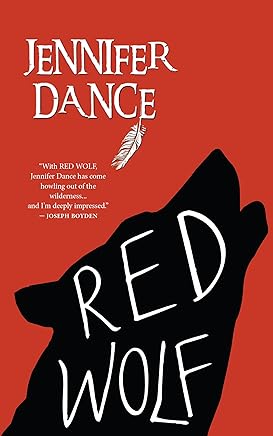
Red Wolf is the story of a boy and an orphaned wolf pup who both endure hard changes once the boy, Red Wolf, is sent to residential school. This book, written by Jennifer Dance, is highly recommended and well reviewed on Google and Good Reads.

After Michiko's father is sent away, her whole family travels to BC's interior to live at an internment camp. This story describes their living conditions and deals with the prejudice of the community as well as living without Michiko's father. This is book one of a three book series written by Jennifer Maruno.

Naomi's Road is told from a child's point of view and is the story of two siblings who are sent to an internment camp without their parents. It is written by Joy Kogawa who experienced being relocated during the Second World War. A new edition includes a historical note and new ending.

Joy Kogawa used her own experiences of being relocated during the Second World War when writing Obasan. She writes about the treatment of Japanese Canadians during and after the Second World War.

I have included this non-fiction book in this list because it is filled with information, maps, diagrams, and photographs. Students may not read all of the text but they will enjoy the visual additions in the book. This series also includes books on many of the topics I have included if more non-fiction books are wanted.

This is the story of Chen Sing starting in China and ending up working on the railroad in Canada. Author, George Chiang gives reasons for why the character is taking the chance to make such a big move and also describes what he finds after making the move.

A partner series to Dear Canada, I am Canada features male protagonists and continues to use journal writing as a form of story telling. This book,written by Paul Yee, tells the story of Lee Heen-gwong who travels to Canada with his father to work on the railroad.
Immigration Past and Present combined with the Refugee Crisis
These two topics are very different but I wanted to put them together. I think this is a good opportunity to compare and contrast being an immigrant versus being a refugee (with sensitivity to the classroom population). I would like students to become aware of why people leave their homes to create a new life in a different country. Through whole class and small group discussion I believe students can grow in their understanding of others. In addition, many of my own students this year had parents who were not born in Canada so it would be an interesting study of their personal family history.

This book is a collection of historical short stories featuring children who move due to immigration and displacement. Themes include racism, the desire to fit it, ad change and stories are set across Canada. It is written by 11 well know Canadian authors.

This book is actually two plays both written by Dennis Foon. I included it in my collection because I feel that reading through a play would be a meaningful way for students to feel like they are part of the story. The plays examine moving to a new country with a new language as well as class politics. The characters in each play face different challenges and learn to work with their new home.

A collection of five stories, Stormy Seas: Stories of Young Boat Refugees by Mary Beth Leatherdale, features stories from across history. It includes photos, maps, timelines, and other items which add to the appeal. The stories included will give students perspective on why people flee their homes and how desperate they are to find a safe home.
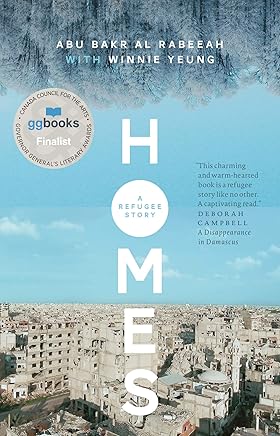
Homes (written by Winnie Yeung as told by Abu Bakr) is a true story about one young Syrian boy found safety in Canada. It describes why his family left their home and will open student's eyes to world events.

The Red Pencil by Andrea Davis Pinkney tells the story of Amira, who's life is changed when her family is forced to flee their home to live at a refugee camp. It starts out on the family farm and tells of why they had to leave as well as their journey.
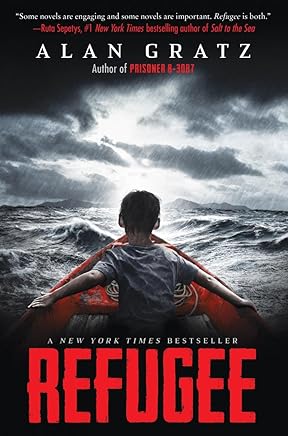
Refugee by Alan Gratz has three main characters from different time periods (1930, 1994, 2015) who each go on journey's looking for a safe home. The journeys are dangerous but the characters do not give up hope. This novel is full of adventure and students' eyes will again be opened to experiences that are different from their own. The inclusion of a present day story will show students that there are still people willing to do anything it takes to find safety.
Conclusion
My hope is that by introducing these themes using literature students will find characters they can relate to and learn from. By reading and discussing these stories students will be drawn into the characters lives and gain a new perspective on history and current world events. This book list is just a start. There is still a lot of reading and planning to do in order to organize all of the thoughts I have around these topics. I hope that my students will be positively impacted by these stories.
Book List
Al-Rabeeah, A., &
Yeung, W. (2018). Homes. Freehand Books.
Chan, A.
(2014). The Chinese head tax and anti-Chinese immigration policies in
the twentieth century. Lorimer.
Chiang, G., &
Warner, J. (2017). The railroad adventures of Chen Sing.
FriesenPress.
Dance, J. (2014). Red Wolf. Dundurn.
Foon, D.
(2006). New Canadian kid & Invisible kids. Playwrights Canada
Press.
Gratz, A.
(2017). Refugee. Scholastic Press.
Jordan-Fenton, C.,
Amini-Holmes, L., & Pokiak-Fenton, M. (2011). A stranger at home.
Toronto: Annick Press.
Jordan-Fenton, C.,
Amini-Holmes, L., & Pokiak-Fenton, M. (2010). Fatty legs (9th
ed.). Annick Press.
Kogawa, J.
(1994). Obasan. New York: Anchor Books.
Kogawa, J., &
Ohi, R. (2005). Naomi's road. Markham, Ont.: Fitzhenry &
Whiteside.
Leatherdale, M.,
& Shakespeare, E. (2017). Stormy Seas: Stories of Young Boat
Refugees. Annick Press.
Maruno, J.
(2009). When the cherry blossoms fell. Napoleon and Co.
Olsen, S., Morris,
R., & Sam, A. (2001). No time to say goodbye. Sono Nis Press.
Pinkney, A., &
Evans, S. (2014). The red pencil. Hachette Book Group.
Ruhl, G.
(2011). Hoping for home. Toronto: Scholastic Canada.
Slipperjack, R.
(2016). These are my words. Toronto: Scholastic Canada.
Yee, P. (2010). Blood and iron. Toronto:
Scholastic Canada.

No comments:
Post a Comment