Sunday, 18 September 2022

Thoughts on Teacher Evaluation

 This week I consider readings around teacher evaluation and shared leadership. During my 20+ years of teaching I have worked at a variety of schools with multiple leadership styles. This podcast looks at what  teacher evaluation is and could be as well as my experience in a very rural community school with a new principal.

Articles mentioned are listed below.

My Thoughts on Teacher Evaluation


Saturday, 26 March 2022

Takeaways Podcast

 Good Morning All,

I have recorded a short podcast episode for my Communication in Leadership course through Royal Roads University. Please take a few minutes to listen in to my reflections on the course. I am including the show notes under the link.

Takeaways March 26

Show Notes:

In the podcast I mention two articles, here are the citations for those.

Fullan, M. (2011). Choosing the Wrong Drivers for Whole System Reform. Centre for Strategic Education. Seminar Series Paper No. 204.

Luthra, A., & Dahiya, R. (2015) Effective Leadership is all About Communicating Effectively: Connecting Leadership and Communication.  IJMBS, 5(3)

Friday, 1 October 2021

Improving Attendance Over Time - An Action Research Focus

Prepared by Christian Stapff and Jamie Sauder October 3, 2021


The Issue

Research shows that children who are repeatedly absent from preschool, kindergarten, and elementary school classrooms, for example, are up to 25.9% less likely to reach a comparable reading level to their peers by 3rd grade and have a four times greater likelihood of ultimately dropping out of school. (Knoster, 2016, p.4)


Chronic absenteeism can occur as early as preschool and kindergarten and has been shown to be related to future chronic absenteeism, grade retention, and poor academic achievement, particularly for social skills and reading. (Alison & Attisha, 2019) Student absenteeism presents a serious challenge to the academic progress and in-class learning of skills.


Yet attendance data is unlikely to change without effective intervention and support of the student and family. The above quotes are based on US data. However, social determinants of health are likely to affect attendance in similar ways in any country.


We know student absences are an issue (CBC, 2019).  Allison & Attisha (2019) and

Garcia & Weiss (2018) lay out the effect of absenteeism in detail. Knoster (2016) offers

strategies to address student attendance for consideration. In my school district, we have one of the highest populations of students who are deemed most vulnerable (Student Success, 2020), with many students--First Nations students in particular--affected by absence from school.  The current District Education Plan makes no reference to attendance as an indicator for success.  However, current strategies seem to have had little effect in improving student attendance. Moreover, FN participation in this process is essential. The issue begs for attention.


The Plan


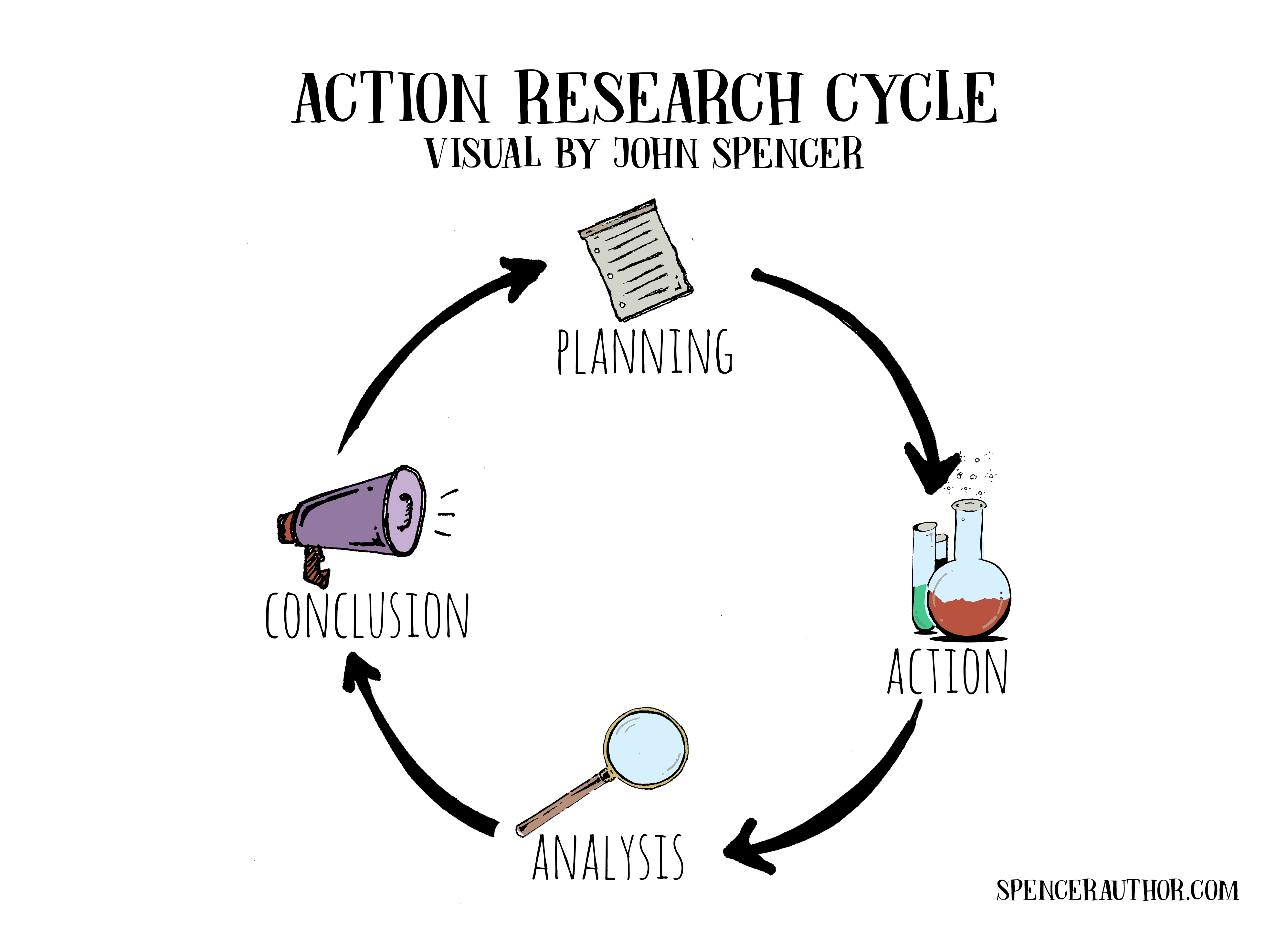
In order to effect positive change it is proposed that our school pilot an intensive focus on student attendance. In spring attendance can be analyzed from the current year and at risk students will be identified. These would be students who consistently miss days or chunks of school time. What we are looking for is a pattern of missing school over the year. Identifying them in May will set them up to begin receiving support in September.


Once students are identified, the school can then focus on identifying specific needs. This can be accomplished through parent/guardian and student interviews. Dialogue will centre around factors that parents/guardians feel contribute to their student being absent as well as the students’ views on why they are frequently away. These conversations can also ask for suggestions on ways to support the family.


Using existing school services such as counsellors, classroom teachers, administrators, and child care workers, a plan can be made to encourage student attendance. Things like having meals available, a quiet work place or area to be alone, after hours follow up and continued discussion would be used to encourage attendance. If needed, supports such as paediatricians, social workers, or outside therapists (occupational or physiotherapists) could be included.


This action research depends heavily on observation and attendance data. Those involved will be continuously checking in with participants, collecting qualitative data to improve services offered and support participants. Quantitative data can be collected through actual attendance numbers. At the end of the school year, a review should be done with participants before deciding if the program will continue into the next school year.


References


Allison, M.A., Attisha, E., and COUNCIL ON SCHOOL HEALTH Pediatrics. February 2019, 143 (2) e20183648; DOI: https://doi.org/10.1542/peds.2018-3648


​​CBC News · Posted: Feb 07, 2019 4:00 AM ET  https://www.cbc.ca/news/health/school-absenteeism-pediatrics-1.5005670  


Knoster, K.C.,  Strategies for Addressing Student and Teacher Absenteeism: A Literature Review ( 2016, November). eric.ed.Gov. Retrieved September 29, 2021, from https://eric.ed.gov/?id=ED584860


SD 84. District Education Plan 2019-22. Retrieved from https://sd84.bc.ca/wp-content /uploads/2020/08/District-Education-Plan-2019-22.pdf


Spencer, J. (2021). Action Research Cycle [Image]. Retrieved from https://sp-ao.shortpixel.ai/client/to_webp,q_glossy,ret_img,w_3986,h_2905/https://

             spencerauthor.com/wp-content/uploads/2017/01/action-research.png


Student Success. British Columbia  Ministry of Education. 2020. Retrieved from https://

             studentsuccess.gov.bc.ca/school-district/084/report/students-entering-school


Friday, 16 July 2021

It's Podcast Review Day!

Urgent vs. Important

A Podcast Review of

Educational Leadership On The Go


Every day we make decisions regarding how we use our time. Knowing how to best prioritize the things that pull our attention will enable us to be better teachers and leaders. 

In this episode of Educational Leadership On The Go titled Urgent vs Important, the hosts, Dr. Dustin Bain, Dr. Ryan Luhning, and Dr. Jaime Welborn share helpful time management information. With leadership experience in elementary, secondary, and post-secondary education, they present ideas that will resonate with all educational leaders. 

Airing in August of 2019, this episode remains relevant as time management is always an important part of our success as leaders. Early in the episode the presenters offer this quote from President Eisenhower for discussion:


'What is important is seldom urgent and 

what is urgent is seldom important."

-Dwight D. Eisenhower


It is mentioned that each of us may have different understandings of what is important and what is urgent. Understanding these differences will help us make decisions on how we spend our time.

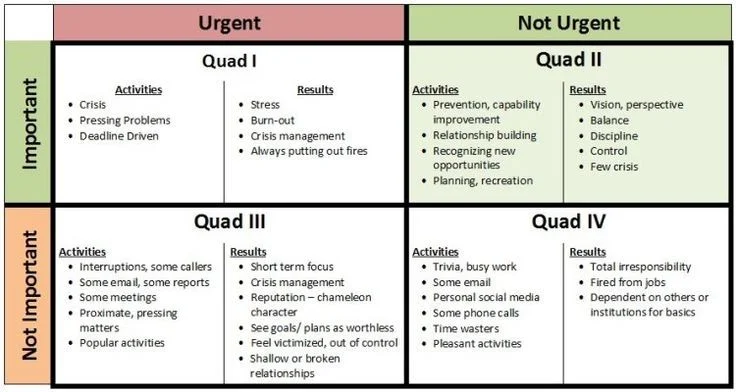
Most of the podcast is spent discussing four quadrants which todays school leaders find themselves moving between using a time management matrix by Stephen Covey:

image credit: Covey, S. (2021). Time Management Matrix [Image]. Retrieved from https://images.squarespace-cdn.com/content/v1/57338a0e2fe1312482379195/1485791609237-SRR2U6TPSZC25MSBR85Z/image-asset.jpeg?format=1500w

Each of the quadrants is explained as are the results of spending time in each. The following summaries give the key takeaways from each of the quadrants as explained by the presenters.


Quadrant 1: Items here are a cross between urgent and important
  • Within this quadrant it becomes important to be able to distinguish between important and urgent
  • Leaders need to balance tasks and set up systems that help with this
  • If everything in your day is urgent there is no time left to lead
  • Some things are important but not urgent
  • Leaders need to prioritize their time
  • Spending too much time in this quadrant will lead to burn out, leaders may feel that they spend all of their time putting out fires


Quadrant 2: Items here are a cross between not urgent and important
  • Leaders should spend the majority of their time in this quadrant
  • Relationship building is a key function here
  • Building relationships builds trust which can ease urgent matters
  • There is room here to set up and implement structures which help deal with the urgent matters
  • When looking at our time we can use a backwards planning approach, where do you want to be? Work backwards from there to make a plan for achievement.
  • Some things, like exercise or healthy eating, are in the important zone but if they are not looked at may lead to urgent self breakdowns
  • Time in this quadrant leads to creating vision and perspective in an organization


Quadrant 3: Items here are a cross between urgent and not important (discussion here is spent talking about ways to avoid being trapped in this quadrant)
  • As we go through the day our focus should be on the thing that is most important - the success of students
  • To avoid spending too much time in this quadrant, leaders should delegate tasks, share the leadership
  • Leaders need to work to protect the time of teachers
  • Sometimes problems can become less urgent if left alone overnight. Not all emails need an immediate response
  • Having a schedule for yourself is acceptable. Answering emails or calls within 24-48 hours is ok.
  • If an email you are writing is longer than one paragraph you need to call instead


Quadrant 4 - Items here are a cross between not urgent and not important
  • Leaders need to be aware of how much time is spent here
  • Spending too much time in quadrants 1 and 3 can cause leaders to burn out and end up here
  • We do need to take care of ourselves and spending about 5% of our time here is healthy


Along with providing a clear idea of the four quadrants and what they entail, the podcast talks about things leaders need to keep in mind when looking at their own leadership style. This includes:
  • Some personalities are more prone to spending time in certain quadrants 
  • First year leaders will spend more time dealing with urgent matters and the lines may be blurred between urgent and important
  • With experience, leaders are better able to distinguish between urgent and important
  • Leaders need to build up teachers as leaders
  • When we feel stress we should take time to reflect on what is happening
  • Have a support system and understand the strengths of those around you

It is suggested at then end that listeners take the time to pay attention to how they spend their time for a day or week. After looking at the types of items that take up the most of our time we can make changes as needed. Spending time stuck on urgent items can make all items seem urgent. We can start to get overwhelmed with the things that we need to do but can't seem to get to. After listening to other leaders discuss their own strategies and areas to improve in I feel better equipped to pay attention to my own time usage.


References:

Bain, D., Luhning, R., & Welborn, J. (2019). Urgent vs. Important [Podcast]. Retrieved 15 July    2021, from https://open.spotify.com/episode/3ijuaE4GfYYlYVQ59nRsQ9?si=Mi6oLFi3ROCS-EEfrnHzMg&dl_branch=1

Schools, T. (2017). Important vs. urgent: Stephen Covey at school — Thriving Schools.            Retrieved 18 July 2021, from http://www.thrivingschools.net/blog/2017/1/30/important-vs-urgent-stephen-covey-at-school


Wednesday, 24 July 2019

Book Collection

Chris Riddell quote
Quote image taken from the Book Aid International website (image is linked)

Today's blog is a collection of books which I hope will guide teachers and student as they look at areas of grade five Social Studies in BC. I have chosen to focus my exploration on Canada's mistreatment of minorities in history, immigration past and present, and touching on the refugee crisis.

I have included the cover of each book and a very short description. Each photo is linked to the Amazon.ca page which will give a more detailed description.

Canada's Treatment of Minorities in History

This area of study will focus on three main events: Residential Schools, Japanese Internment Camps, and the Head Tax for Chinese immigrants combined with the building of the railroad. These are three of the defining pieces of our history and the effects are still being felt in many families and communities. Through using literature I hope students will be introduced to these events and be able to discuss them. 

Fatty Legs

In Fatty Legs, Christy Jordan-Fenton and Margaret Pokiak-Fenton tell the true story of one girl who wants to go to school to learn to read. She travels to the residential school and faces many challenges there including being singled out by one of the teachers. Margaret stands up to her challenges and readers will be encouraged by her bravery. There are also photographs and artwork included in this book.

A Stranger At Home: A True Story

A Stranger at Home is the story of what it was like for Margaret to return home after two years in residential school. Authors Christy Jordan-Fenton and Margaret Pokiak-Fenton describe how Margaret no longer understands the language of her people and that she is branded an outsider by her village. Over time Margaret re-learns what she has forgotten and also learns the importance of being true to herself.

Dear Canada: These Are My Words: The Residential School Diary of Violet Pesheens

Though this is a work of fiction, the author, Ruby Slipperjack attended a residential school and draws from this experience in her writing. This book is written in the style of a diary and is part of a very popular book series, Dear Canada. It chronicles the struggles of the main character as she tries to adjust to life at residential school.

No time to say goodbye: Children's stories of Kuper Island Residential School

This is a fictional account of five children who are sent to residential school together. Living on a n isolated island the story tells of how they helped each other adjust to new routines and rules. The author, Sylvia Olsen, used the recollections of members of the Tsartlip First Nations people when writing her book.

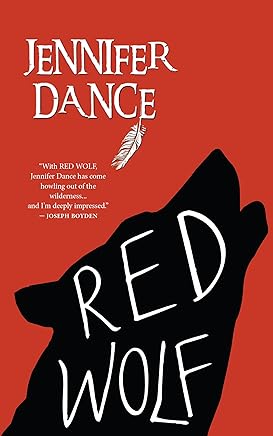
Red Wolf

Red Wolf is the story of a boy and an orphaned wolf pup who both endure hard changes once the boy, Red Wolf, is sent to residential school. This book, written by Jennifer Dance, is highly recommended and well reviewed on Google and Good Reads.

When the Cherry Blossoms Fell: A Cherry Blossom Book

After Michiko's father is sent away, her whole family travels to BC's interior to live at an internment camp. This story describes their living conditions and deals with the prejudice of the community as well as living without Michiko's father. This is book one of a three book series written by Jennifer Maruno.

Naomi's Road

Naomi's Road is told from a child's point of view and is the story of two siblings who are sent to an internment camp without their parents. It is written by Joy Kogawa who experienced being relocated during the Second World War. A new edition includes a historical note and new ending.


Joy Kogawa used her own experiences of being relocated during the Second World War when writing Obasan. She writes about the treatment of Japanese Canadians during and after the Second World War.

Righting Canada's Wrongs: The Chinese Head Tax and Anti-Chinese Immigration Policies in the Twentieth Century

I have included this non-fiction book in this list because it is filled with information, maps, diagrams, and photographs. Students may not read all of the text but they will enjoy the visual additions in the book. This series also includes books on many of the topics I have included if more non-fiction books are wanted.

The Railroad Adventures of Chen Sing

This is the story of Chen Sing starting in China and ending up working on the railroad in Canada. Author, George Chiang gives reasons for why the character is taking the chance to make such a big move and also describes what he finds after making the move. 

I Am Canada: Blood and Iron: Building the Railway, Lee Heen-gwong, British Columbia, 1882

A partner series to Dear Canada, I am Canada features male protagonists and continues to use journal writing as a form of story telling. This book,written by Paul Yee, tells the story of Lee Heen-gwong who travels to Canada with his father to work on the railroad.


Immigration Past and Present combined with the Refugee Crisis

These two topics are very different but I wanted to put them together. I think this is a good opportunity to compare and contrast being an immigrant versus being a refugee (with sensitivity to the classroom population). I would like students to become aware of why people leave their homes to create a new life in a different country. Through whole class and small group discussion I believe students can grow in their understanding of others. In addition, many of my own students this year had parents who were not born in Canada so it would be an interesting study of their personal family history.

Dear Canada: Hoping for Home: Stories of Arrival

This book is a collection of historical short stories featuring children who move due to immigration and displacement. Themes include racism, the desire to fit it, ad change and stories are set across Canada. It is written by 11 well know Canadian authors.

New Canadian Kid & Invisible Kids

This book is actually two plays both written by Dennis Foon. I included it in my collection because I feel that reading through a play would be a meaningful way for students to feel like they are part of the story. The plays examine moving to a new country with a new language as well as class politics. The characters in each play face different challenges and learn to work with their new home.


Stormy Seas: Stories of Young Boat Refugees

A collection of five stories, Stormy Seas: Stories of Young Boat Refugees by Mary Beth Leatherdale,  features stories from across history. It includes photos, maps, timelines, and other items which add to the appeal. The stories included will give students perspective on why people flee their homes and how desperate they are to find a safe home.

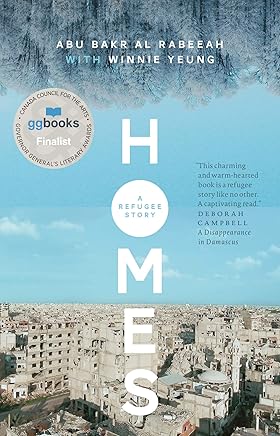
Homes: A Refugee Story

Homes  (written by Winnie Yeung as told by Abu Bakr) is a true story about one young Syrian boy found safety in Canada. It describes why his family left their home and will open student's eyes to world events. 

The Red Pencil

The Red Pencil by Andrea Davis Pinkney tells the story of Amira, who's life is changed when her family is forced to flee their home to live at a refugee camp. It starts out on the family farm and tells of why they had to leave as well as their journey.

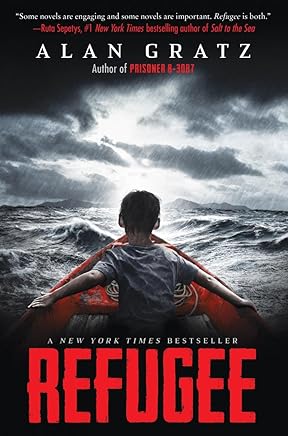
Refugee

Refugee by Alan Gratz has three main characters from different time periods (1930, 1994, 2015) who each go on journey's looking for a safe home. The journeys are dangerous but the characters do not give up hope. This novel is full of adventure and students' eyes will again be opened to experiences that are different from their own. The inclusion of a present day story will show students that there are still people willing to do anything it takes to find safety.

Conclusion

My hope is that by introducing these themes using literature students will find characters they can relate to and learn from. By reading and discussing these stories students will be drawn into the characters lives and gain a new perspective on history and current world events. This book list is just a start. There is still a lot of reading and planning to do in order to organize all of the thoughts I have around these topics. I hope that my students will be positively impacted by these stories.


Book List
Al-Rabeeah, A., & Yeung, W. (2018). Homes. Freehand Books.
Chan, A. (2014). The Chinese head tax and anti-Chinese immigration policies in the twentieth century. Lorimer.
Chiang, G., & Warner, J. (2017). The railroad adventures of Chen Sing. FriesenPress.
Dance, J. (2014). Red Wolf. Dundurn.
Foon, D. (2006). New Canadian kid & Invisible kids. Playwrights Canada Press.
Gratz, A. (2017). Refugee. Scholastic Press.
Jordan-Fenton, C., Amini-Holmes, L., & Pokiak-Fenton, M. (2011). A stranger at home. Toronto: Annick Press.
Jordan-Fenton, C., Amini-Holmes, L., & Pokiak-Fenton, M. (2010). Fatty legs (9th ed.). Annick Press.
Kogawa, J. (1994). Obasan. New York: Anchor Books.
Kogawa, J., & Ohi, R. (2005). Naomi's road. Markham, Ont.: Fitzhenry & Whiteside.
Leatherdale, M., & Shakespeare, E. (2017). Stormy Seas: Stories of Young Boat Refugees. Annick Press.
Maruno, J. (2009). When the cherry blossoms fell. Napoleon and Co.
Olsen, S., Morris, R., & Sam, A. (2001). No time to say goodbye. Sono Nis Press.
Pinkney, A., & Evans, S. (2014). The red pencil. Hachette Book Group.
Ruhl, G. (2011). Hoping for home. Toronto: Scholastic Canada.
Slipperjack, R. (2016). These are my words. Toronto: Scholastic Canada.
Yee, P. (2010). Blood and iron. Toronto: Scholastic Canada.

Monday, 2 July 2018

Course Reflection

Before this class started I was feeling a little apprehensive due to the fact it was a condensed course occurring over one of the busiest times of the year. After watching the introduction video by our professor (Darcy McNee), however, I felt a little better. I found that these weekly video updates were very useful in planning my week and also helped me feel comfortable approaching Darcy with questions or concerns.

The textbook for this course, Why School? by Will Richardson was easy to read and discussion flowed naturally. I appreciated that the textbook was short and that it was used for the discussion each week.

This was my fist time completing a blog based course which took a week or two to get used to. Putting my thoughts out there for all to see made me nervous but the comments of my classmates helped me to see that what I had to say was appreciated and worth while.

I loved that for the final project we were given freedom to research an area of interest. As I've mentioned many times, I don't yet work in the library so this gave me an opportunity to choose a crossover topic that I could use both in the classroom and in the future as a teacher librarian. I feel excited about the resource I have created and feel like I have learned something new about ways to present information.

One of my goals in taking the TL Diploma program is to learn new technology and web based resources. I have definitely accomplished that goal through this course using Lucidchart in my first blog post to create a flowchart, and then using Symbaloo and Adobe Spark in my final project.

I think other than the academic benefits of taking this course one of the biggest things I have noticed is that I feel more confident sharing my ideas. I am thankful that Darcy required us to post and share our ideas. I wouldn't have done anything like this on my own.


Curious About Inquiry - My Final Project

It's hard to believe that it's time to publish my final project! This class has flown by and has been my favourite so far. Thanks for sticking with the blog, I am excited to share with you my digital artifact.


I have enjoyed this course because of the freedom I had in choosing my direction of study. In the past I have struggled with this but for whatever reason this course it just clicked. I think it has been harder for me because I am a classroom teacher which can make it harder to complete library specific assignments. This course opened things up a bit so that my topic of study could relate to both the library and the classroom.


This year has been challenging for me moving from TTOC work to teaching full time Kindergarten. I say challenging, but not at all in a bad way. I found that trying something so outside my comfort zone like Kindergarten has made me try new things and made me grow and stretch in many positive ways. Through this stretching I have begun to explore new ideas and since I am new to Kindergarten I need to find my passion in teaching these young children. That is where my interest in Inquiry Based Learning for Kindergarten came from. I was seeing all of these things like loose parts, and provocations, terms which I was not familiar with, and I could see potential in them. I wanted to know more and as I started to research I realized I would need to keep track of what I found which brings me to the purpose of my project.


I knew that I wanted to try something new for this project, to work with a website I hadn't used yet. I also new I needed to find a way to organize my resources. At one time I suppose I could have used recipe cards but that would be very hard to share with you all!


After asking around I settled on using Symbaloo as an organizational tool and Adobe Spark as a platform to explain my organization of the resources.

Here are the two parts of my project with the links in the titles.

Part 1 - Symbaloo


The first thing I did was go through the list of bookmarks I had collected on my computer. These were sorted, sifted, added to, and then organized by type onto Symbaloo. 


Once I started organizing my resources I realized that I also needed a way to share my method with others. I understand how and why I chose each symbol but not everyone would. By using Adobe Spark I was able to create a web page which explains how to use the Symbaloo. This is also linked on the Symbaloo page by clicking the compass square.


Curious About Inquiry


Works Cited

A complete list of the works cited in my project can be found on my Adobe Spark page.


Reflections


Once I completed my project I decided it was time to share it with other teachers in order to reflect on my learning and the usefulness of this project. I started out by emailing a few kindergarten teachers I know. Then, I took a risk and asked for help on the Kindergarten Connections Facebook page.

I have had a lot of positive feedback on the project so far. Teachers mentioned the Symbaloo is attractive, well organized, and easy to navigate. The Adobe Spark page also had positive feedback with teachers commenting that it is clear and helpful.

I did also have a few suggestions which helped me improve the project. One of my friends found some link errors, and another teacher suggested moving the guide button so it is on it's own (a fabulous suggestion). 

Sharing this project with others was scary. I have spend a lot of time with this and to release it to others made me nervous. At the same time I knew I had to otherwise what was the point of creating this resource? 

What Now?

I hope that after I publish and share the final draft of my project that I will continue to receive feedback and even suggestions of things to add or remove. I want this to be a living resource, something I can revisit and use as I hope to teach K again next year.


Sunday, 17 June 2018

Access to Libraries for Everyone

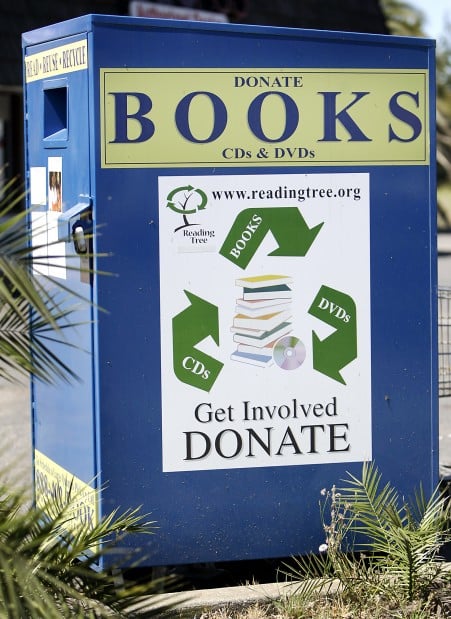
When I first started thinking about how we bring books and libraries to developing countries the first thing I thought of is the big blue book donation bins placed around town.

Image result for book donation bin
Image taken from an article in the Napa Valley Register.

I have, in the past, put books into these bins mostly because I didn't want to figure out what to do with them. After doing some charity work myself I started to realize that people don't want my cast offs, they want meaningful, useful materials. How can we make sure that the help we are sending is actually needed, and more so, wanted?

Thinking about book distribution I immediately wonder how much it would cost to ship books around the world. Is there a better option? In response to this I did a quick search and found a few articles on how digital libraries are being used more and more in developing nations.

Image result for overdrive library

I found this article interesting when thinking about the role of smart phones in spreading libraries:

Mobile access to digital libraries in developing countries: a reflection on motives, options and sustainability

The author takes a look at how (at the time or publication) around 84% of households with access to a mobile phones. A rate much higher than that of computers. It is suggested that making libraries digital and making sure people have access to them is the way of the future.

I agree that this seems like a convenient way to bring libraries into every household. In order for this to be successful I feel like there would still need to be education in place to make sure people know how to access the libraries. Also, the people need to be literate and have access to books from a young age to build an interest in reading. Just providing the app and access is not enough.

I think the fact is that there is no easy answer to how to build, maintain, and use libraries in developing countries. We can not go in with our North American view of how things work and expect the same model to work everywhere. With that in mind I started reading about two organizations.

1. Global Libraries.

This organization is part of the Bill & Melinda Gates Foundation and has four areas of focus: Research and Innovation, Delivery, Training and Leadership, and Impact, Advocacy, and Policy. What immediately drew me to this organization is that they are teaching people how to use the technology as well as making it accessible. There is a focus on digital libraries but also on internet research skills. People in poor, rural, and developing areas are given access and are taught what to do with it. That is how meaningful change can take place for these people. I like that the focus is not only global but also the poor and rural close to home.

2. Library for All

I first found this organization as a Kickstarter which made me curious. They were able to raise $109,000 in 2013 towards digital libraries in developing countries. Their mission is to build digital libraries and also to educate children.  They have programs in five countries using a cloud-based library platform. The website shows kids and adults learning to read, using tablets to access books. They also work with local partners to make sure the program is appropriate and sustainable. They provide easy to understand graphics like this one to encourage sponsorship (according to the website $10 can provide a child access to the digital library for a full year).

Quality Process.png
The Pillars of Our Library - taken from the Library for All website

Both of these organizations resonate with me because the combine access with teaching. I love that these groups are partnering with communities, not just dumping resources. It is the best way to bring change.

If you want to read further about more charities working to bring books and libraries to the world, check out the following list:

12 Amazing Book And Literacy Charities That Are Changing The World


Works Cited

Sousa, J. (2012). Book Donation Bin. [image] Available at: https://napavalleyregister.com/news/local/rival-boxes-collect-books-for-profit-and-donation/article_f1b5c5a2-f7bf-11e1-9e86-0019bb2963f4.html [Accessed 17 Jun. 2018].

Overdrive. (2018). [image] Available at: https://resources.overdrive.com/library/marketing-outreach/library-digital-resources/ [Accessed 17 Jun. 2018].

Barreto Da Rosa, I. and Lamas, D. (2013). Mobile access to digital libraries in developing countries: a reflection on motives, options, and sustainabiity. [online] ResearchGate. Available at: https://www.researchgate.net/publication/259485595_Mobile_access_to_digital_libraries_in_developing_countries_a_reflection_on_motives_options_and_sustainability [Accessed 17 Jun. 2018].

Bill & Melinda Gates Foundation. (2018). Global Libraries. [online] Available at: https://www.gatesfoundation.org/What-We-Do/Global-Development/Global-Libraries [Accessed 17 Jun. 2018].

Evans, T. (2017). Homepage. [online] Library For All. Available at: http://www.libraryforall.org/ [Accessed 18 Jun. 2018].

Weiss, A. (2015). 12 Amazing Book Charities Around The World. [online] Bustle. Available at: https://www.bustle.com/articles/126582-12-amazing-book-and-literacy-charities-that-are-changing-the-world [Accessed 17 Jun. 2018].


Sunday, 10 June 2018

The School Staff as a Learning Network

As the face of the school library starts to shift and change a lot of Teacher Librarians are also the school technology experts. Of course, just because that is part of the job doesn't make it true for all TLs. So the question for me is how can someone who might be only moderately comfortable with technology teach their peers how to effectively use technology in their classrooms?

After talking to other Teacher Librarians about this I have seen that there is a wide range of skills and beliefs around this subject. There is a range from schools that have another teacher who is in charge of technology to schools where the TL is the leader in showing how technology can be used.

With this in mind I started working on a list of ideas for how I can become better at sharing technology with others. Also keeping in mind that some of them may not be looking for new ideas and others will be way ahead of what I know.

Here we go:

1. Be willing to try new things and make mistakes

If we want our staff to try new things then we need to show them that it is OK to try something out even if you are not sure how it works. In some cases students will have a better understanding of the programs we are using and we can use that to our advantage. Some of the Teacher Librarians I have talked to have used the makerspace to teach technology to students and then had the students demonstrate their learning to other teachers. The teachers then took what they had seen and applied it to the classroom.

2. Don't Be Afraid to Get Help

There are endless numbers of blogs and websites that will help me understand technology better. One that has been recommended to me is Free Technology For Teachers. This blog includes many different programs, tips, and links presented in video format that will help me better understand something and maybe present an idea more clearly than I could.

3. Get One or Two teachers on Board

It is important to have other staff members who can back you up on an idea. If I am able to collaborate with teachers then I will have people who will talk to other teachers and let them know what worked for them. Having a cheer leader for a program is always a good thing.

For a list of ideas on apps for student-collaboration try these websites:

7 Must Have Student-Collaboration Apps, Tools, and Resources

Best Student-Collaboration Tools

6 Ed-Tech Tools to Try in 2018

4. Learn Together

I'll admit that a lot of what I am learning about new technology is just that - new. I don't think I would ever be caught up on the new and exciting things going on so why try to learn it all before passing it on? There are opportunities to offer pro-d sessions or book club type events where teachers come out and try the tech for themselves. This definitely goes hand in hand with number one.

5. Branch Out to Differnt Areas of Tech

It is easy to find a list of apps and programs to use on computers and tablets but that is not the only type of technology that should be used. I have talked to teachers who are using 3D printers, green screens, and robots in their makerspace. One of my kindergarten colleagues has used the Ozobot with her class with a lot of success. I have used dash robots with early primary and they loved them (of course those are still using iPads as well).
Ozobot follows pathways you hand draw, or map out on a tablet.
An Ozobot follow lines drawn on paper


For me I think the main thing to remember will be to just dive in and try. Otherwise I will spend all of my time researching instead of experimenting.


Works Cited

Byrne, R. (2018). [Blog] Free Technology for Teachers. Available at: https://www.freetech4teachers.com/ [Accessed 11 Jun. 2018].

Lynch, M. (2017). 7 Must Have Student-Collaboration Apps, Tools, and Resources - The Tech Edvocate. [online] The Tech Edvocate. Available at: http://www.thetechedvocate.org/7-must-student-collaboration-apps-tools-resources/ [Accessed 11 Jun. 2018].

Common Sense Education. (2017). Best Student-Collaboration Tools. [online] Available at: https://www.commonsense.org/education/top-picks/best-student-collaboration-tools [Accessed 11 Jun. 2018].

Gonzalez, J. (2018). 6 Ed Tech Tools to Try in 2018 | Cult of Pedagogy. [online] Cult of Pedagogy. Available at: https://www.cultofpedagogy.com/6-tech-tools-2018/ [Accessed 11 Jun. 2018].

O'Brien, C. (2015). Ozobot. [image] Available at: https://www.irishtimes.com/polopoly_fs/1.2199548.1430923874!/image/image.jpg_gen/derivatives/box_620_330/image.jpg [Accessed 11 Jun. 2018].


Sunday, 3 June 2018

Learning is Part of Teaching


Part of what I have enjoyed most about teaching a completely different grade this year is that I have had to be open to learning new things. As a teacher it has always been important to me but I admit there have been times where I have coasted a bit in my teaching practices. When you move from upper intermediate to primary that is not an option. It has been a refreshing change for me to have to completely re-evaluate my ways of teaching. For this blog post I want to think about how I can continue to learn, grow, and develop a personal learning network.

There are many ways to approach this. I am going to look at three: Social Media, published books, and blogs.

Social Media

The first thing I did when starting my discovery journey for this course was reach out to my Kindergarten Connections Facebook group. They were able to identify many people, blogs, and organizations that would be helpful for me as I investigate Inquiry Based Learning in early primary. This group consistently posts ideas, questions, and discussions which help me grow as a teacher. By seeing what works or doesn’t work for others I am encouraged to try new things myself. I am also becoming more familiar with Twitter, noticing articles that are being posted by fellow students and colleagues.

Published Books

When looking into the suggestions from my Facebook query I was lead to the book Inquiry Mindset by Trevor Mackenzie and Rebecca Bathurst-Hunt. Rebecca is one of the first people suggested to me as someone to watch on Twitter for Kindergarten so I was very curious to read a book which focused on primary students. I struggled with whether or not to include a traditional book resource but I think it is going to make a huge impact on my teaching (once I finish reading it). Along with the book I have access to webinars and printable copies of the Sketchnotes* included in the book. I now have a copy sitting here beside me and am looking forward to giving it some attention.


Blogs

I love looking through blogs. For me it is always easier to try something once I have seen it in action. It’s like taking a virtual visit to another classroom. There are endless numbers of blogs that I could follow and I think it will be important for me to narrow it down to the top 5 for now and then add more as I become more familiar with each blog.  Here are three that I was immediately drawn to:

1. The Curious Kindergarten by Alexis McDonell
2. Fairy Dust Teaching founded by Sally Haughey
3. Inquiry Teacher Blog by Rebecca Bathurst-Hunt

Each of these blogs give concrete examples of how inquiry can be incorporated into kindergarten classes. They are also full of photos and links to other resources.


*Sketchnoting is a way of taking notes using pictures and doodling. For more information try this video.

Works Cited
MacKenzie, T. and Bathurst-Hunt, R. (2018). Inquiry mindset. Irvine: EdTechTeam Press.

Baughcum, C. (2017). My Pencil Made Me Do It. [video] Available at: https://www.youtube.com/watch?v=zNJyuJl5LKk [Accessed 3 Jun. 2018].

McDonell, A. (n.d.). The Curious Kindergarten. [online] The Curious Kindergarten. Available at: https://thecuriouskindergarten.blog [Accessed 3 Jun. 2018].

Haughey, S. (n.d.). Home - Fairy Dust Teaching. [online] Fairy Dust Teaching. Available at: https://fairydustteaching.com [Accessed 3 Jun. 2018].

Bathurst-Hunt, R. (n.d.). Inquiry Teacher Blog. [online] Rbathursthuntblog.wordpress.com. Available at: https://rbathursthuntblog.wordpress.com/ [Accessed 3 Jun. 2018].